Ask five Dubai agents where to buy and you'll get five confident answers, usually pointing at whatever tower they're paid to move that month. This map works differently. It sorts eight districts by the one question that actually matters: what do you need the apartment to do? Produce rent every month, hold its value through the next dip, or house your family near a decent school. Different jobs, different postcodes.
One rule runs under everything here. Prestige and yield pull in opposite directions. The postcard addresses cost more per square foot, return a thinner percentage in rent, and find a buyer quickly when you want out. The cheaper districts flip that: strong gross yields, slower exits, and a construction pipeline that never quite stops. Neither side is wrong. They're different tools, and most disappointed buyers in Dubai simply picked the wrong tool for the job they had in mind.
How to read this map
Dubai prices move quickly enough that any figure printed here would age badly, so each area gets a relative tier instead, running from entry-level through mid-market and premium up to trophy. Yields get the same treatment. When you want actual district-by-district percentages, they live in our guide to Dubai rental yields by area, which we update as the numbers shift. This article is about character, not decimals.
Rental profile matters as much as price tier. A long-let is a one-year contract registered through Ejari: predictable income, little management. A short-let is a licensed holiday home competing for tourists, with higher gross takings and far more work. Some districts feed both markets. Most lean one way, and buying against the lean is a classic first-timer loss.
One piece of good news before the tour: all eight districts below are designated freehold zones. An overseas buyer owns outright, with title registered at the Dubai Land Department, and the legal mechanics are identical across the map. The choice is purely about what kind of asset you want.
Dubai Marina: the liquid one
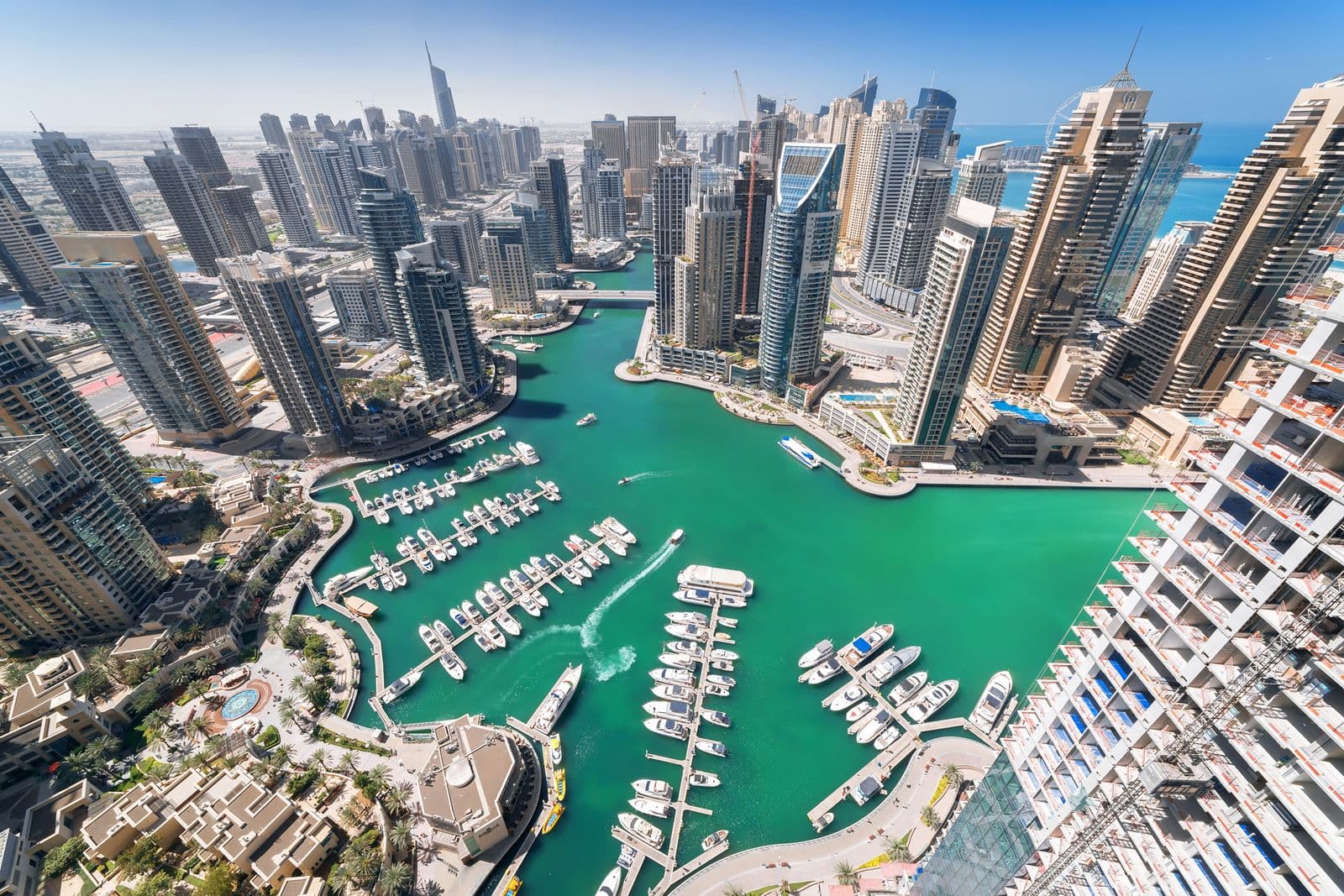
The Marina is finished. That single fact drives everything about it as an investment. Emaar master-planned the district around a man-made harbour two decades ago, the land was built out years back, and nobody can squeeze a new tower between yours and the water. So the Marina trades on a scarcity that inland districts will never have, and it's consistently among the most transacted areas in the city. When you need to sell, buyers exist at every rung, from tired first-wave towers to new waterfront stock.
Who's it for? Investors who rank exit speed above headline yield, and first-time overseas buyers who want a market deep enough to forgive an average purchase. Price tier: premium, though the spread inside the district is wide. An older mid-block tower costs meaningfully less per square foot than anything touching the water or the beach walk at JBR.
Rentals run both ways. Professionals sign year-long contracts for the walk-to-work-then-beach lifestyle, while holiday-let operators keep studios and one-beds near the beach filled most of the year. The trade-offs are age and fees. Towers from the first wave are pushing twenty and it shows in lifts, lobbies and service charge bills. Check the building's maintenance record before you fall for the view.
Downtown Dubai: the trophy address
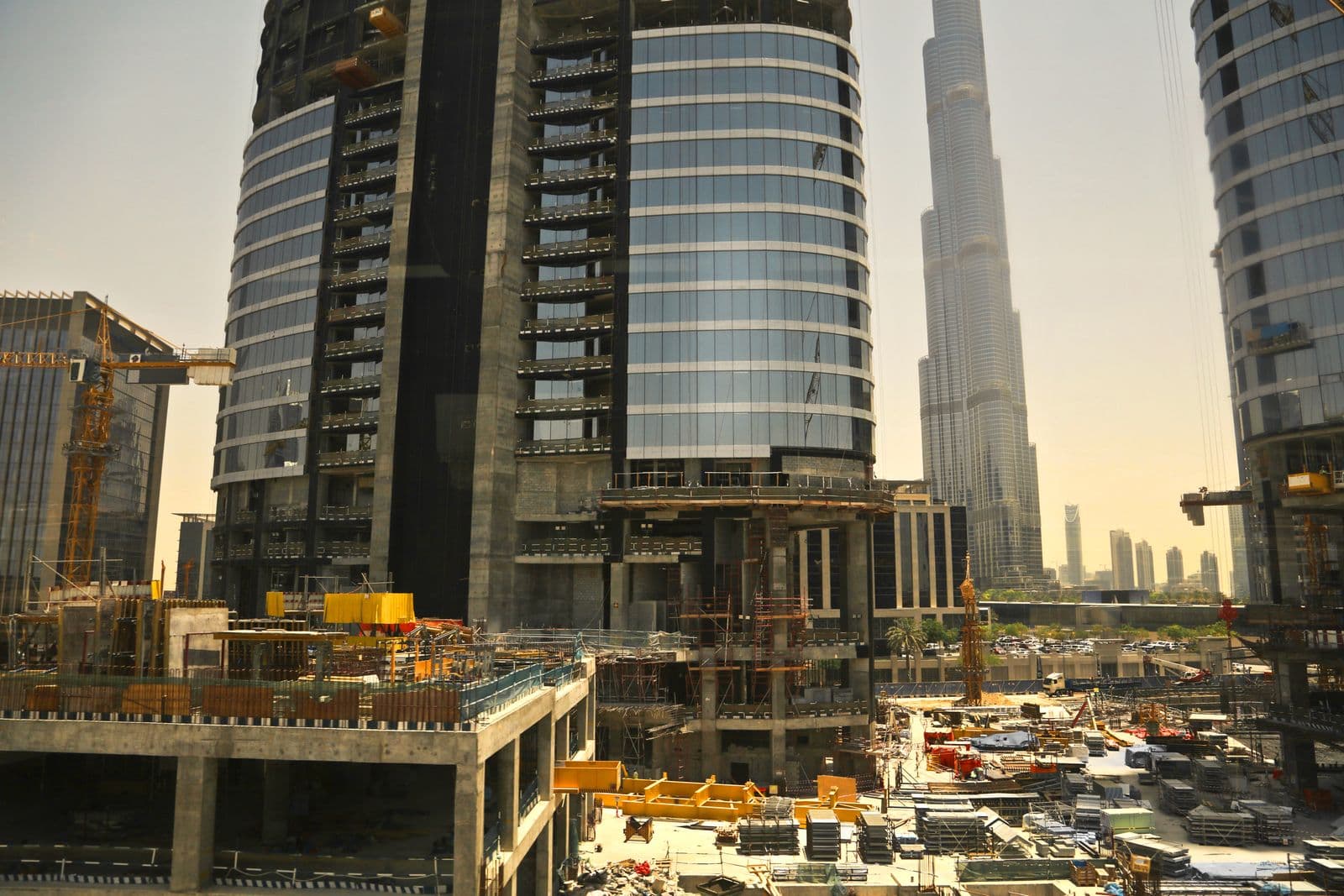
Downtown is the postcode people buy partly to say they own it. Burj Khalifa above, Dubai Mall downstairs, the Opera a short walk away. Global recognition keeps demand deep, and that same recognition is exactly why yields here sit among the lowest in the city. You're paying for the address first and the income second, and the market never pretends otherwise.
It suits buyers parking capital in something they can always sell, and owners who'll actually use the apartment a few weeks a year. Tier: trophy at the Burj-adjacent core, premium toward the edges. Short-lets perform well; tourists pay serious nightly premiums for a fountain view, and New Year's Eve alone amounts to a small season. Long-lets go mostly to corporate tenants who expense the rent and renew without drama.
The trade-offs are running costs and crowds. Service charges in the flagship towers are heavy, the roads clog every evening, and a unit without a view competes on price alone against hundreds of identical floor plans. Buy the view or buy elsewhere.
Palm Jumeirah: capital preservation on reclaimed sand
Nobody buys the Palm for cash flow. Yields here are the thinnest on this list, and the buyers don't care, because the island does something no other district can: it cannot grow. Every frond villa and every trunk apartment sits on a fixed supply of land in the most photographed address in the Gulf. That's the entire investment case, and it has held through every cycle since the island opened.
The Palm suits wealth preservation and lifestyle ownership. Think beach frontage, resort amenities, a name that needs no explanation. Apartments cluster along the trunk and the crescent, and the tier is trophy nearly throughout, with a handful of older trunk buildings trading a step below. Short-lets do strong seasonal business around the beach clubs and Atlantis. Long-let tenants are typically senior executives with families, the kind who stay years.
Trade-offs: one road in and out, so a school run to the mainland tests patience daily. Build quality in the earlier trunk towers varies more than the brochures admit. And low-yield assets look worst on paper in a correction, even if Palm owners rarely panic-sell in practice.
Business Bay: Downtown adjacency at a discount
Business Bay is what you buy when you want Downtown's location without Downtown's premium. It sits directly south of the Burj district along the water, a dense grid of office and residential towers that finally grew into itself once the canal frontage filled with cafés, hotels and running paths.
The natural buyer is a professional who'll live there, or an investor targeting the same tenant: young, salaried, office within walking distance, no car needed. Tier: mid-market to premium depending on how close you get to the canal. Long-lets are the backbone of the district. Short-lets are growing quickly too, because the location competes with Downtown at a friendlier nightly rate.
The catch is variance. Quality swings from tower to tower more than anywhere else in central Dubai; a canal-front building by a serious developer and a cramped mid-grid tower of chopped-up studios can stand two streets apart. A few blocks still feel like office parks after eight in the evening. In Business Bay you're not buying the area, you're buying the building. Inspect accordingly, and read the service charge history as carefully as the floor plan.
Jumeirah Village Circle: the yield workhorse
JVC is where Dubai's gross yields go to show off. Entry-level prices, tenants who keep arriving because everything nearer the coast costs more, and among the city's highest gross returns year after year. If your goal is cash flow per dirham invested, this is the district the spreadsheet keeps choosing.
It suits first-time investors on lean budgets, and landlords who'd rather own two apartments here than half of one in the Marina. Tenants are young professionals and small families trading commute time for space; many stay because the community has quietly accumulated schools, gyms and a proper mall. This is long-let territory. Short-let demand exists but stays thin without a beach or a landmark nearby.
Now the honest part. JVC's yields are high partly because its risks are real. New towers hand over constantly, and every cluster of handovers softens rents for a season. Build quality runs from genuinely good to regrettable, sometimes on the same street. And at resale you're competing with developers selling off-plan next door on payment plans you can't match. Buy from the stronger developers, price the rent realistically, and treat capital growth as a bonus rather than the plan. On those terms, JVC delivers exactly what it promises.
Jumeirah Lakes Towers: the value play beside the Marina
JLT sits directly across Sheikh Zayed Road from Dubai Marina, shares its metro stations, and costs noticeably less per square foot. For years the gap was explained by prestige. The gap persists anyway, and the people quietly exploiting it are those who worked out that a lake view and a five-minute walk to the same offices isn't much of a sacrifice.
The district has something the Marina never developed: a community feel. Dog walkers around the lakes, school runs, independent coffee spots at the base of towers, DMCC free-zone workers who've stayed a decade. Buyers split roughly evenly between value-minded owner-occupiers and yield-focused investors. Tier: mid-market. Long-lets to free-zone professionals form the core of demand, with short-let spillover from the Marina filling the rest.
Trade-offs arrive cluster by cluster. Some towers are excellent, some show their age, parking allocations vary, and units facing Sheikh Zayed Road hear it day and night. As in Business Bay, the building matters more than the postcode. But measured purely on what you get for what you pay, JLT may be the most rational purchase on this entire list.
Dubai Hills Estate: the family master-plan
Dubai Hills is what happens when one developer plans a suburb end to end and gets most of it right. Emaar laid it out around a golf course, added a serious mall, parks people actually use, schools and a major hospital inside the community, then let the greenery mature. It sits between Downtown and the Marina along Al Khail Road, which puts most of the city within a twenty-minute drive on a good day.
Apartments here suit families who want villa-community life at an apartment price, and investors chasing the most stable tenant type there is: households anchored by school places. Turnover is low and renewals are the norm, which is worth more than a headline yield suggests. Tier: mid-market to premium, with the master-plan polish already priced in. This is long-let country almost exclusively. Tourists have no reason to be here, and residents consider that a feature.
The trade-offs are yield and the car. Returns are modest because purchase prices anticipate the district's quality, and the metro doesn't reach it, so every household drives everywhere. If you want cash flow, look at JVC. If you want tenants who stay four years and treat the apartment as home, look here.
Dubai South and Expo City: the airport-driven long game
Every district above is a bet on Dubai as it exists. Dubai South is a bet on Dubai as it's planned. The district wraps around Al Maktoum International, the airport the emirate intends to build into the world's largest, with Expo City's legacy site next door already hosting companies, events and the Route 2020 metro link. Entry-level prices, long horizon, conviction required.
It suits patient capital: buyers comfortable holding seven to ten years while the infrastructure catches up, at ticket sizes small enough that waiting doesn't hurt. Today's tenants are airport, logistics and Expo City workers on long lets. Short-let demand barely exists yet, and pretending otherwise is how bad projections get made.
Buy in Dubai South because you believe the airport timetable, not because a masterplan render looked convincing. Renders always look convincing.
The risks are the honest kind. Timelines out here have slipped before. Resale is thin because the buyer pool is still small. And unlike the Marina, there's effectively unlimited land, so supply can expand to meet any surge in demand, which caps price growth until airport traffic makes the district unavoidable. If that day comes on schedule, today's buyers will look very clever. If it slips five years, they'll need the patience they promised themselves at the start.
Which district fits which buyer
Strip away the marketing and the choice usually resolves in a couple of moves. Start with the job the apartment has to do, then let the map narrow itself.
- First investment on a lean budget, cash flow the priority: JVC, with JLT as the step up once the budget allows.
- Monthly income with an easier resale later: JLT or Business Bay, where yields stay respectable and the buyer pool runs deeper.
- Capital preservation ahead of income: Palm Jumeirah or core Downtown, accepting thin yields as the price of owning something scarce.
- Balanced ownership you won't lose sleep over: Dubai Marina, the district most forgiving of an imperfect purchase.
- A home first and an asset second: Dubai Hills Estate, or JLT if you'd rather skip the driving.
- A small, long-horizon position on the city's next chapter: Dubai South, sized so you won't miss the money while you wait.
Then settle the legal and tax side once, properly. Our UAE country guide covers ownership rules for foreign buyers, transaction costs and the golden visa route tied to property. And when you're ready to compare actual units rather than districts, the HomeNSearch catalogue lists current Dubai apartments alongside projects in twelve other countries. That last part is useful perspective. Sometimes the right answer to "which area of Dubai" turns out to be a different city altogether.
Frequently asked questions
Which area of Dubai has the highest rental yields?
The affordable inland districts lead on gross yield, with JVC the usual front-runner and similar communities close behind. Premium coastal districts trail on percentages while winning on resale speed. For current figures by district, see our Dubai rental yields guide, which we revise as the market moves.
Is Dubai Marina or JLT the better buy?
They share a location and a metro line, so the answer hangs on what you're optimising. The Marina wins on prestige, tourist rental demand and speed of resale. JLT wins on price per square foot and yield. Owner-occupiers on a budget usually do better in JLT; investors who may need a fast exit tend to pay up for the Marina and consider it insurance.
Can foreigners buy apartments in all eight districts?
Yes. Every district in this article is a designated freehold zone, so foreign buyers take full ownership with title registered at the Dubai Land Department. The purchase process is the same across the map. What changes is the paperwork of the individual building: service charges, the owners' association rules, and any restrictions on holiday letting.
Should I buy off-plan or ready in these areas?
In built-out districts like the Marina, JLT and the Palm, ready stock dominates and you can inspect exactly what you're buying. In JVC, Business Bay and Dubai South, off-plan takes a large share of the market and the payment plans look tempting, but you inherit handover-timing risk and you'll compete with the next launch when you sell. Match the choice to your horizon, and stick to escrow-registered projects either way.