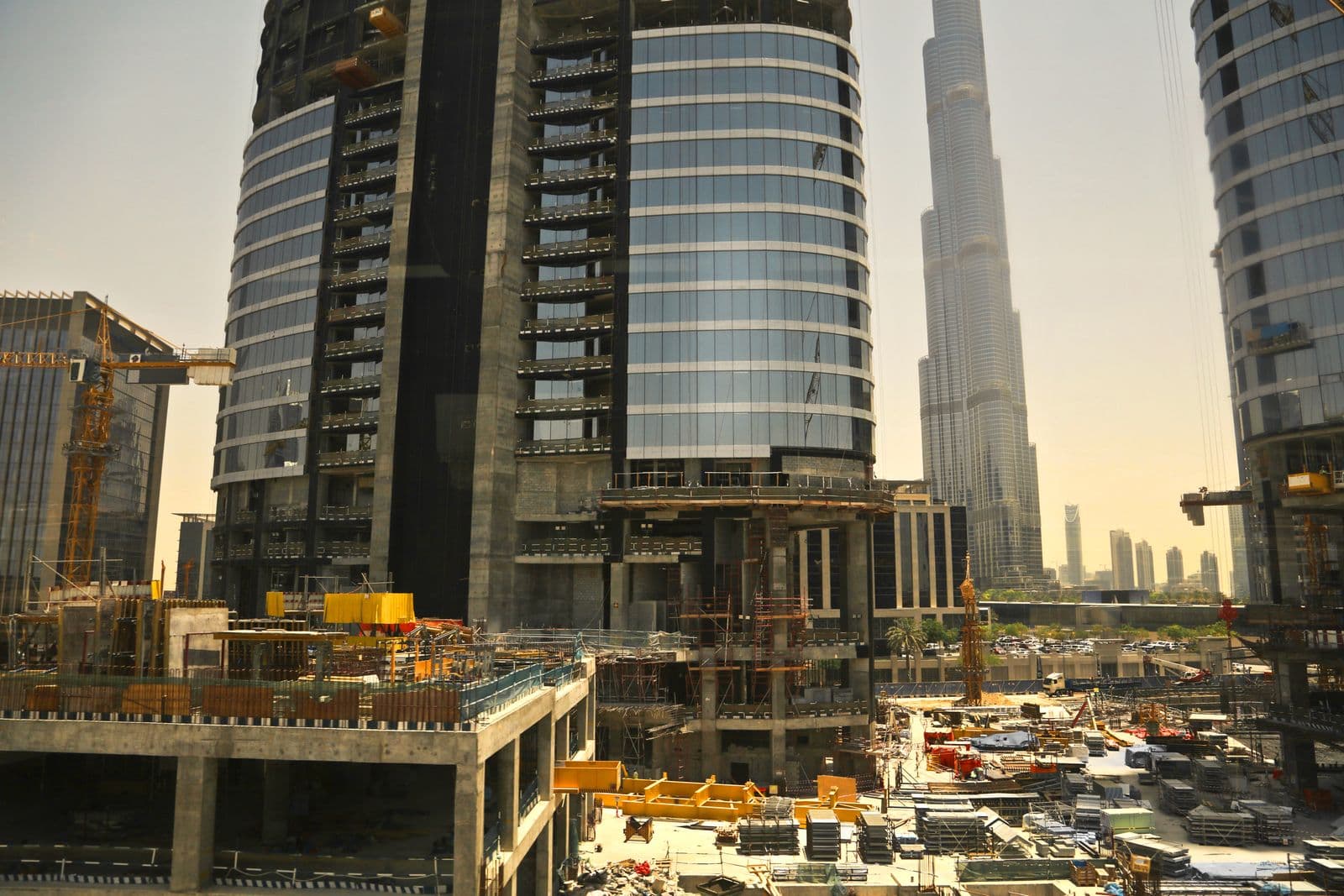
Most of what sells at a Dubai launch doesn't exist yet. Off-plan units, bought from a floor plan and a set of renders, have accounted for the majority of the city's property transactions in recent years, and new projects come to market almost weekly.
Buyers keep showing up for two reasons. You pay in instalments while the tower goes up instead of wiring the full price on day one, and launch prices generally sit below comparable finished stock in the same district. The regulator, meanwhile, has spent nearly two decades building guardrails after the 2008 crash showed what happens without them. Here's how the payment plans work, what actually protects your money, and which risks survive all that protection.
Why off-plan dominates Dubai's launches
The model suits both sides of the deal. Developers pre-sell to fund construction and prove demand to their lenders. Buyers get three or four years to pay, first pick of units and floors, and a price fixed before the district around the project matures. In master-planned areas like Dubai Creek Harbour or Dubai South, almost everything on offer starts as off-plan because the buildings simply aren't there yet.
There's also the financing angle. A ready property bought with a mortgage means a deposit plus fees upfront and repayments from month one. An off-plan instalment plan spreads the same outlay across the construction period with no interest, because it isn't a loan. For buyers who'd rather not borrow, that structure is the whole attraction.
How the payment plans are structured
A typical plan opens with a booking deposit of around 10%, followed by instalments tied either to calendar dates or to construction milestones: a slice at foundation, another when the build passes 40%, and so on. The split between what you pay during construction and what you pay at completion gives plans their shorthand names. A 60/40 plan means 60% while the tower rises and 40% when you collect the keys.
Post-handover plans push part of the price beyond completion. You might pay half during construction, move in or let the unit out, then clear the balance over two or three years while it earns rent. Convenient, but rarely free. Developers price that flexibility into the unit, so compare the same layout across projects before deciding the stretched schedule is worth it.
Mortgages exist for off-plan too, though UAE Central Bank rules cap lending at 50% of the price, against up to 80% for a completed first home. Most buyers simply follow the developer's schedule and mortgage the final instalment at handover if needed.
What protects your money
Dubai learned its regulatory lessons the hard way. In 2008-2009, dozens of projects stalled with buyer deposits gone for good. The framework built since then has three main layers.
Escrow accounts
Under Dubai Law No. 8 of 2007, every off-plan project must have an escrow account with a DLD-approved bank before a single unit is sold. Your instalments go into that account, not into the developer's operating funds. The bank releases money only against construction progress certified by independent consultants, so a developer can't spend your payments on marketing or on a different site. After completion, 5% of project value stays locked in escrow for a further year to cover defects.
Practical rule: pay only into the escrow IBAN named in your sale agreement. Anyone asking for a transfer to a different account, whatever the explanation, is your cue to walk away.
Oqood interim registration
A finished property gets a title deed. An off-plan unit gets the interim version: Oqood registration with the Dubai Land Department, which records your contractual interest in the specific unit before the building exists. The registration fee is 4% of the purchase price, the same DLD rate charged on ready sales. Once registered, your unit can't be sold twice, and your position survives even if the project changes hands. Confirm the registration yourself through the Dubai REST app rather than taking the sales office's word for it.
The 20% rule and RERA oversight
Before selling anything off-plan, a developer must own the land outright and clear a financial hurdle: complete 20% of the construction, deposit 20% of project value in escrow, or post a bank guarantee for that amount. RERA, the regulatory arm of the DLD, approves each project, publishes completion percentages from its own site inspections, and can freeze sales or cancel a development that stops moving. When a project is cancelled, a judicial committee winds it up and refunds buyers from the escrow account.
The risks that remain
None of that machinery makes off-plan as safe as a completed apartment with a title deed. Four risks deserve honest attention.
Delays
Still the most common problem. Approvals run late, contractors get replaced mid-project, and a developer whose sales slow down has less escrow inflow to draw against, which slows the site further. Most sale agreements give the developer six to twelve months of grace beyond the anticipated completion date before you have any claim at all; past that, compensation means the courts. Read the delay clause before signing, not after the second missed quarter.
Your own default
The instalment schedule is a binding contract, and Dubai law sets out a defined process for buyers who stop paying. The developer notifies the DLD, you get 30 days to remedy, and after that the developer can terminate and keep a share of what you've paid. The exact share depends on how far construction has progressed, and it's significant, commonly cited around 25-40% of the contract value. Off-plan is not a position you can quietly abandon. If circumstances change, selling the contract on is usually the better exit, though most developers require 30-40% of the price paid before they'll consent to an assignment, and they charge a fee for the paperwork.
A market drop mid-plan
You commit at the launch price. If values fall 15% while the tower rises, you still owe the contract price, and a bank valuing the unit at handover will lend against the lower current figure, leaving you to bridge the gap in cash. Dubai has lived this scenario: buyers who signed at the 2014 peak watched prices slide for five years before recovering. Cycles are part of this market. Buy off-plan with a horizon long enough to sit through one.
The render gap
Marketing shows a lagoon at dusk. Handover delivers a building. With established developers the gap between the two is usually modest; with new ones it can hurt: cheaper lobby finishes, a gym half the rendered size, a "sea view" interrupted by the next launch across the road. Legally, what counts is the specification annex in your sale agreement, not the brochure, and many contracts let the built area differ from the contracted figure by a few percent without compensation. Get finishes, appliances and view commitments listed in writing.
Vetting the developer and the project
Most off-plan grief traces back to skipping checks that take an afternoon. Before reserving anything, work through this short list.
- Visit two or three of the developer's completed projects, ideally handed over five or more years ago, and look at how the buildings have aged.
- Compare promised handover dates on past projects with actual delivery; portals and news archives make this easy.
- Confirm the project's RERA registration, escrow account details and current completion percentage on the DLD website or the Dubai REST app.
- Have a UAE property lawyer read the sale agreement, with attention to the delay clause, area tolerance, assignment terms and the specification annex.
A launch discount that evaporates under this scrutiny was never a discount.
Handover and snagging
When the building receives its completion certificate, the developer calls in the final instalment and hands over. Don't sign the acceptance form on the spot. Commission a snagging inspection first; the service costs a few hundred dirhams and up, and routinely finds dozens of defects, from misaligned doors to unsealed balconies. Submit the list before taking possession. The developer remains liable for defects in fittings and systems for a year after handover, and for the structure itself for ten years under UAE decennial liability. Once you've paid in full, the Oqood registration converts into a title deed in your name. The wider purchase mechanics, fees included, are covered in our guide to buying property in Dubai.
When off-plan beats ready, and when it doesn't
Off-plan wins when your horizon is long, you value the instalment structure over immediate rent, and you're buying into a district with real infrastructure on the way. It loses when you need rental income from month one, when you want to inspect exactly what you're paying for, or when your finances can't absorb a late handover. There's no universal answer, only a fit or a mismatch with your situation; the full trade-offs are in our off-plan vs resale comparison.
HomeNSearch lists both current launches and ready stock across the Emirates, so you can weigh a payment plan against a completed apartment in the same neighbourhood on our UAE page before committing either way.
FAQ
Can foreigners buy off-plan property in Dubai?
Yes. Foreign buyers can purchase off-plan in any of Dubai's designated freehold areas, which cover most districts where new projects launch. The Oqood registration, and later the title deed, are issued in your name, and ownership carries no residency requirement.
Can I sell my off-plan unit before handover?
Usually, through an assignment of the sale contract to a new buyer. Developers typically require that 30-40% of the price has been paid before they consent, and they charge a no-objection certificate fee. In a rising market, assignments are a common way to exit with a profit before ever taking the keys.
What happens if my project is cancelled?
RERA can cancel a development that has stalled, after which a judicial committee liquidates it and refunds buyers from the escrow account. The protection is real, but the process is slow; refunds can take years, and money sitting in escrow earns you nothing while you wait.
Is off-plan cheaper than a ready property in Dubai?
At launch, comparable off-plan units generally price below finished stock in the same area, and the instalment plan spreads the cost interest-free. Whether the deal stays cheaper depends on what the market does before handover, which is why the discount should never be the only reason to buy.