Montenegro rekent in euro's, ligt op hooguit drie uur vliegen van de meeste Europese hoofdsteden, en verkoopt nog altijd appartementen met zeezicht voor de prijs van een parkeerplek in Genève. Het aankoopproces is verrassend kort: geen aankoopvergunning voor buitenlanders, geen overheidsgoedkeuring voor appartementen, en een kadaster dat je naam binnen enkele weken op de akte zet. Deze gids behandelt wie wat mag kopen, elke stap van de deal, de belastinghervorming van 2024 die de helft van het internet nog altijd niet heeft opgemerkt, en hoe een eigendomsakte verandert in een verblijfsvergunning.
Mogen buitenlanders onroerend goed kopen in Montenegro?
Ja, en met minder haken en ogen dan bijna overal elders op de Balkan. Buitenlandse particulieren kopen appartementen en huizen vol eigendom, op hun eigen naam, met exact dezelfde titel als een Montenegrijnse burger. De juridische toets is wederkerigheid: kan een Montenegrijn onroerend goed bezitten in jouw land, dan kun jij dat ook in Montenegro. Dat geldt voor de EU, het VK, de VS, Canada, Australië, de Golfstaten en vrijwel elk land waar kopers daadwerkelijk vandaan komen. Je advocaat bevestigt het binnen een dag. En de zeldzame nationaliteiten zonder wederkerigheidsregeling staan ook niet buitenspel: zij kopen via een lokale vennootschap, dezelfde constructie die voor grond wordt gebruikt.
Grond is het enige terrein waar de regels bijten. Een buitenlandse particulier mag wel de kavel onder zijn huis bezitten, maar landbouwgrond, bos, percelen boven een bepaalde omvang en alles in een grenszone kan niet rechtstreeks op een buitenlands paspoort worden geregistreerd. De oplossing is een Montenegrijnse vennootschap, een d.o.o.: jij bezit de vennootschap, de vennootschap bezit de grond. Advocaten zetten er zo een op in ongeveer een week, voor een paar honderd euro, en een flink deel van de buitenlandse villa's met grote tuinen zit precies in zo'n constructie. Routine, geen achterdeurtje.
Het koopproces, stap voor stap
Van geaccepteerd bod tot ingeschreven eigendom duurt een schone deal vier tot acht weken. Zo verloopt het:
- Schakel je eigen advocaat in voordat je iets ondertekent. Reken op zo'n 1% van de prijs, vaak met een minimum van een paar honderd euro bij goedkopere appartementen. De advocaat haalt het eigendomsblad, de list nepokretnosti, rechtstreeks uit het kadaster en checkt op hypotheken, beslagen, mede-eigenaren die nooit hebben getekend en vooral: of het gebouw wel legaal is.
- Vraag een fiscaal identificatienummer aan bij de belastingdienst. Eén paspoort, één kort formulier, meestal dezelfde dag nog afgegeven. Je hebt het nummer nodig voor het contract en later voor de belastingaangifte.
- Onderteken een voorlopig koopcontract en betaal een aanbetaling, doorgaans 10%. Montenegrijns recht behandelt die aanbetaling op de oude Joegoslavische manier: trek jij je als koper terug, dan ben je het geld kwijt; trekt de verkoper zich terug, dan moet die het dubbele terugbetalen. Optioneel bij een gewone doorverkoop, standaard bij nieuwbouw.
- Onderteken het definitieve contract bij de notaris. Notariële akte is hier verplicht bij vastgoedtransacties, en spreek je geen Montenegrijns, dan is er een beëdigd tolk bij de ondertekening of wordt het contract tweetalig opgesteld.
- Maak het geld over, bank naar bank. Notarissen en banken verwachten een schone, gedocumenteerde overboeking; contante deals wekken hier net zo veel argwaan als overal elders.
- De notaris dient het contract in bij het kadaster, dat jou als nieuwe eigenaar registreert. Bij een doorverkoop stuurt de belastingdienst daarna de aanslag overdrachtsbelasting.
De klassieke valkuil in Montenegro is geen fraude, maar legalisatie. Duizenden gebouwen aan de kust verrezen in de jaren negentig en tweeduizend zonder volledige vergunningen. Een pand dat nooit is gelegaliseerd, krijgt geen hypotheek, loopt op papier het risico van sloop en verkoopt slecht door. Eén kadastercontrole beantwoordt de vraag — laat je die dus nooit overslaan.
Bij nieuwbouw is er nog een extra huiswerkje. Montenegro kent geen escrowregeling zoals Dubai die heeft, dus je bescherming zit in het trackrecord van de ontwikkelaar, een geldige bouwvergunning en een contract dat betalingen koppelt aan bouwfases. Vraag wat er is gebeurd met de laatste twee projecten van de ontwikkelaar en wanneer de sleutels daadwerkelijk zijn overhandigd. Vage antwoorden betekenen dat de korting het niet waard is.
Op afstand kopen met een volmacht
Je hoeft geen voet op Montenegrijnse bodem te zetten. Met een volmacht, getekend bij een Montenegrijnse ambassade of bij een notaris thuis en voorzien van een apostille, kan je advocaat namens jou het identificatienummer aanvragen, het contract tekenen bij de notaris en de akte inschrijven, terwijl jij via e-mail meekijkt. Makelaars aan de kust regelen elke maand op afstand afgesloten deals voor kopers uit Duitsland, het VK en de Golfstaten. Bezichtigingen via videocall, het contract via de volmacht, de sleutels per koerier.
Financiering: reken op eigen geld
Montenegrijnse banken verstrekken wel hypotheken, maar voor niet-ingezetenen zijn ze schaars en het papierwerk kruipt in zijn eigen tempo. Voor lokale kopers lopen looptijden van 20 tot 25 jaar, tegen rentes die niemand uit Duitsland of het VK zullen imponeren. De meeste buitenlandse kopers betalen contant, lenen tegen vastgoed in eigen land, of gebruiken betalingsregelingen van de ontwikkelaar bij nieuwbouw, waarbij gefaseerd betalen tot oplevering standaard is. Hangt je aankoop af van een lokale lening, regel dan de goedkeuring van de bank schriftelijk vóórdat je het voorlopige contract tekent, niet erna.
Wat kost een aankoop echt?
Hier wantrouw je het beste het meeste van wat Google je voorschotelt. Jarenlang herhaalde elke gids dezelfde regel: Montenegro rekent een vlakke overdrachtsbelasting van 3%. Dat eindigde in januari 2024. De overdrachtsbelasting op doorverkoop is nu progressief:
- 3% over het deel van de prijs tot €150.000
- 5% over het deel tussen €150.000 en €500.000
- 6% over alles daarboven
Reken het uit voor een appartement van €300.000: €4.500 over de eerste schijf plus €7.500 over de tweede, samen €12.000, een effectief tarief van 4%. Elk artikel dat nog een vlakke 3% noemt, stamt van vóór de hervorming en is nooit bijgewerkt — dat zegt genoeg over de rest van dat artikel.
Nieuwbouw van een btw-plichtige ontwikkelaar ontloopt de overdrachtsbelasting helemaal. In plaats daarvan zit er 21% btw in de prijs, en zit erin is het sleutelwoord: het is verwerkt in het geadverteerde bedrag, niet iets dat later bij de notaris bovenop komt. De rest van de rekening blijft bescheiden. Notariskosten komen neer op een paar honderd euro bij een gemiddeld appartement, afhankelijk van de prijs. Juridische kosten liggen rond 1%. Makelaars rekenen 3% en meer, van oudsher gefactureerd aan de verkoper, al sluipt die kostenpost bij goedkopere panden nogal eens de vraagprijs in — vraag dus vóór je bezichtigingen boekt wie wat betaalt. Geen overdrachtszegel, geen vermogensbelasting die er later nog bijkomt.
Bezit is ook goedkoop. De jaarlijkse gemeentelijke onroerendgoedbelasting loopt van 0,25% tot 1% van de marktwaarde, waarbij kustplaatsen tweede woningen aan de bovenkant van die bandbreedte belasten; op een appartement van €200.000 in Budva praat je over enkele honderden euro's per jaar, geen duizenden. Verkoop je later, dan wordt de winst belast tegen 15%. Huurinkomsten worden ook tegen 15% belast, na een vaste kostenaftrek van 30%.
Verblijf: wat je eigendomsakte je oplevert
Eigendom van een woning in Montenegro is de basis voor een aanvraag van een tijdelijke verblijfsvergunning, de privremeni boravak. Je dient aan met je eigendomsblad, een zorgverzekering, bewijs van voldoende middelen en een verklaring omtrent gedrag. De vergunning wordt afgegeven voor maximaal een jaar tegelijk en wordt verlengd zolang het pand van jou blijft. Voor veel kopers is dit eigenlijk het hele punt van de aankoop: een vakantieappartement verandert in een legale thuisbasis, en de 90-dagenklok van de toerist speelt geen rol meer. Aanvragen lopen via het kantoor van het ministerie van Binnenlandse Zaken in de gemeente waar het pand ligt, en beslissingen komen doorgaans binnen enkele weken. Partners en kinderen kunnen op grond van gezinshereniging meedoen, dus één akte kan het hele huishouden dekken.
Twee eerlijke kanttekeningen. De vergunning op basis van eigendom geeft geen werkrecht, en jaren op deze vergunning tellen niet mee voor permanent verblijf — daarvoor is een andere grond nodig, zoals een dienstverband of gezinsband. Wil je van Montenegro echt je hoofdverblijf maken in plaats van je lange zomerhuis, plan de route dan met dat verschil in het achterhoofd.
En het staatsburgerschap? Montenegro had ooit een investeerdersregeling gekoppeld aan goedgekeurde resortprojecten. Die sloot eind 2022 voor nieuwe aanvragers en is nooit heropend. Websites die nog altijd een Montenegrijns paspoort adverteren voor een investering van €450.000, beschrijven een programma dat niet meer bestaat — de tweede plek waar verouderde content je met plezier op het verkeerde been zet.
Waar te kopen: een korte tour langs de kust
De kust is nauwelijks 100 kilometer lang van kop tot staart, en toch gedragen de markten langs die kust zich als afzonderlijke landen. Onze landenpagina Montenegro houdt actuele advertenties en prijzen bij; hier de korte tour. Landinwaarts is er een kleine skimarkt rond Kolašin en Žabljak, maar het geld — en deze tour — blijft aan het water.
Budva
De verhuurmotor. Budva en zijn riviera, Bečići, Rafailovići, Petrovac, vangen het grootste deel van Montenegro's zomertoerisme op, en een goed gerund appartement met één slaapkamer bij de Oude Stad zit van juni tot september vrijwel volgeboekt. Koop hier voor rendement en makkelijke doorverkoop, en accepteer de betonnen skyline en de drukte in augustus als onderdeel van de deal.
De Baai van Kotor
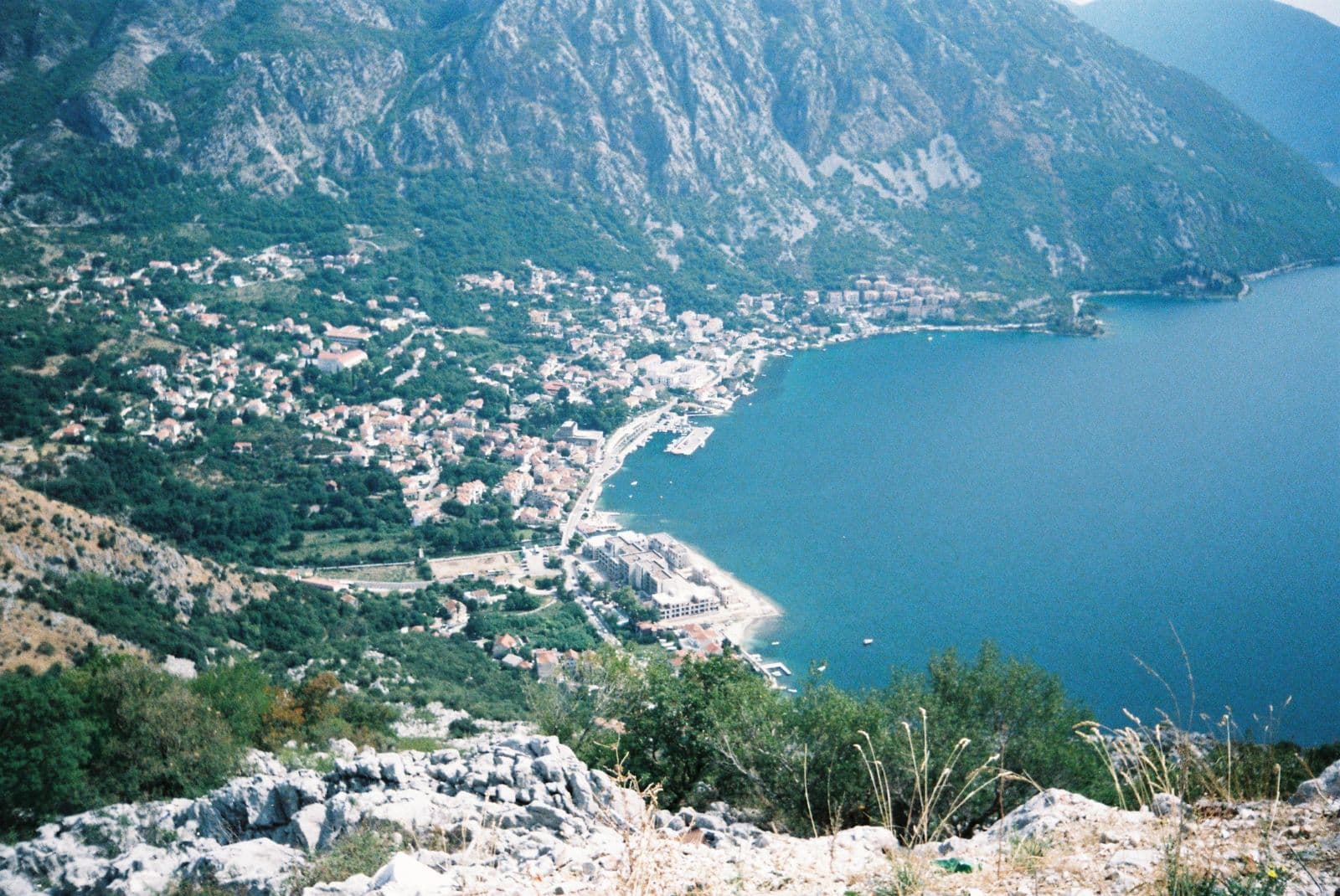
De baai is de ansichtkaart: een door UNESCO erkende inham met stenen dorpjes als Perast en Dobrota langs het water en de ommuurde stad Kotor aan het hoofd ervan. Kopers hier jagen meer op schoonheid dan op rekenmodellen. De renovatieregels volgen de erfgoedstatus, en gerestaureerde stenen huizen halen prijzen die de rest van de kust niet aantikt.
Tivat en Porto Montenegro
Het premiumsegment. De superjachthaven van Porto Montenegro maakte van Tivat, ooit een marinestad, de duurste postcode van het land, met de luchthaven vijf minuten van de aanlegsteigers. Appartementen gaan hier ver boven het landelijk gemiddelde weg, en de markt volgt haar eigen ritme, dichter bij een schaalmodel van Monaco dan bij de rest van Montenegro.
Bar en Ulcinj
De prijs-kwaliteitkeuze. Bar is een werkende havenstad met een lange boulevard en enkele van de laagste prijzen per vierkante meter aan de Adriatische kust, en Ulcinj, tegen de Albanese grens aan, ligt aan de 13 kilometer lange stranden van Velika Plaža. Bepaalt budget je zoektocht, begin dan hier, en kijk daarna in onze gids over betaalbaar wonen aan zee hoe het zuiden van Montenegro zich verhoudt tot andere goedkope mediterrane bestemmingen.
Herceg Novi
Herceg Novi bewaakt de ingang van de baai en is een terrasvormige stad vol trappen en tuinen die ook 's winters leeft — iets wat voor het grootste deel van de kust niet geldt. Rustiger dan Budva en goedkoper dan Kotor, past het bij kopers die van plan zijn echt maanden in het land door te brengen in plaats van twee weken in augustus.
De EU-vraag
Het langetermijnverhaal voor Montenegro past in één woord: toetreding. Het land is officieel EU-kandidaat, heeft alle onderhandelingshoofdstukken geopend en gebruikt al de euro, unilateraal ingevoerd in 2002, dus kopers die in euro's verdienen lopen helemaal geen valutarisico. Brussel en Podgorica hebben lidmaatschap vóór 2030 geopperd, en Kroatië liet na 2013 zien wat toetreding met kustprijzen kan doen. Zie dat alles als meevaller, niet als het plan. Balkanse toetredingsschema's zijn eerder uitgelopen en kunnen dat weer doen, dus koop een pand dat op de huidige prijs al klopt en reken EU-lidmaatschap als gratis optie bovenop de akte.
Kloppen de cijfers voor jou, kijk dan wat er echt te koop staat. HomeNSearch biedt appartementen, huizen en grond langs de Montenegrijnse kust in onze vastgoedcatalogus, naast twaalf andere landen als je nog aan het vergelijken bent.
Veelgestelde vragen
Kunnen Amerikanen onroerend goed kopen in Montenegro?
Ja. Wederkerigheid geldt, en Amerikanen kopen appartementen en huizen vol eigendom op hun eigen naam, net als EU-burgers. Alleen de beperkte grondcategorieën, dus landbouwgrond, bos en grond in de grenszone, vragen om een Montenegrijnse vennootschap, en die regel geldt voor elke buitenlandse nationaliteit gelijk.
Geeft een woning kopen in Montenegro je het staatsburgerschap?
Nee. De investeerdersregeling voor staatsburgerschap sloot eind 2022. Wat eigendom wél oplevert, is een verlengbare tijdelijke verblijfsvergunning; naturalisatie loopt via het gewone traject van ongeveer tien jaar rechtmatig verblijf in het land.
Kan ik onroerend goed kopen in Montenegro zonder er te zijn geweest?
Ja, en het is routine. Een notariële, van apostille voorziene volmacht laat een lokale advocaat namens jou het identificatienummer aanvragen, bij de notaris tekenen en de akte inschrijven, terwijl het geld via bankoverschrijving reist. Genoeg eigenaars staan pas voor het eerst in hun appartement nadat de sleutels al van hen zijn.
Wat kost bezit jaarlijks?
Gemeentelijke onroerendgoedbelasting van 0,25% tot 1% van de marktwaarde, energiekosten die vanuit West-Europa bezien laag ogen, en 15% belasting op huurinkomsten na de standaard kostenaftrek van 30%. Bij een gemiddeld appartement aan de kust blijven de vaste jaarlijkse kosten meestal onder de duizend euro.